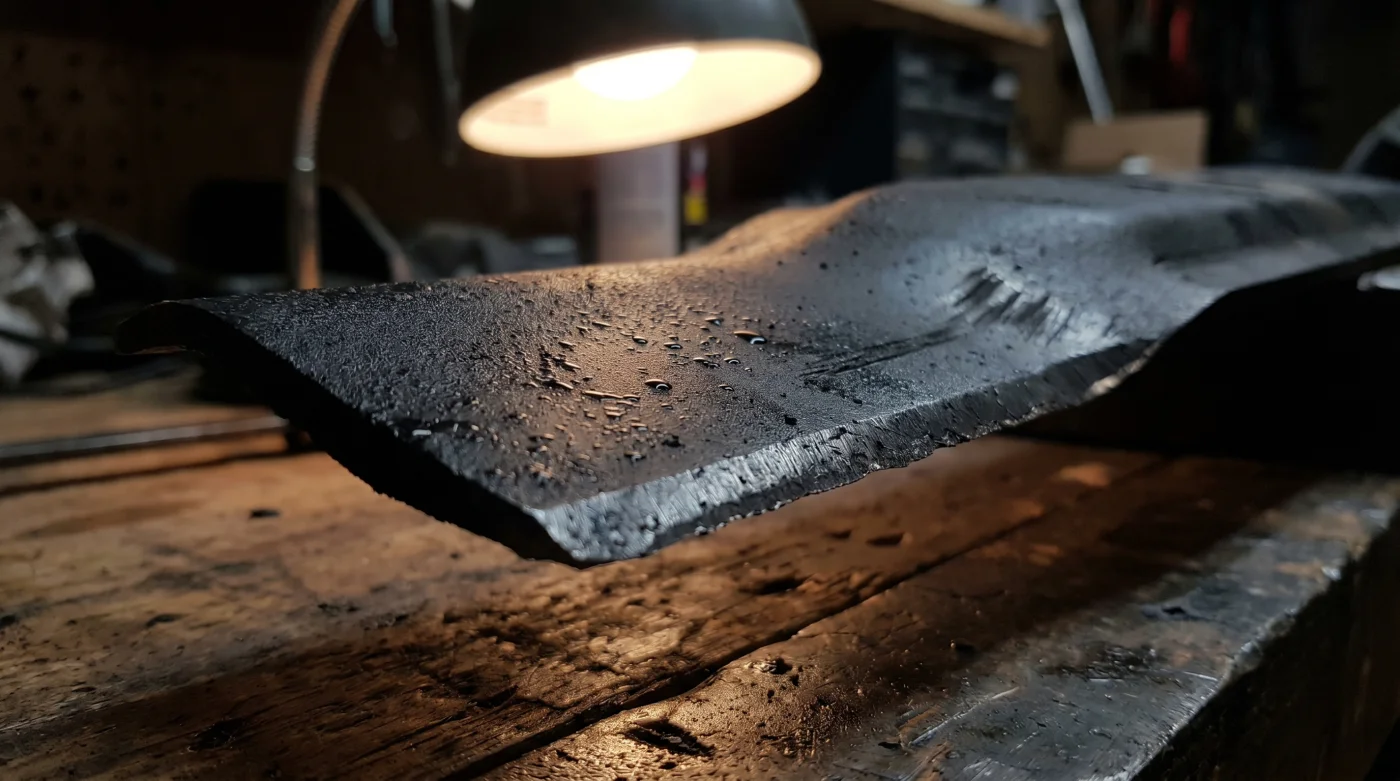
The morning air hangs heavy in the suburbs. It is barely seven o’clock, and the grass is still holding tightly onto the night’s moisture. You push your mower out of the garage, eager to beat the harsh July heat, inhaling that unmistakable, sharp scent of fractured chlorophyll. It feels productive, almost meditative, to lay down those perfectly straight stripes across the lawn before the neighborhood fully wakes up.
But listen closely to the hollow hum vibrating through the handlebar as you hit a particularly dense patch. Beneath the steel deck, an invisible war is waging. The combination of high-speed rotation, damp cellulose, and fresh oxygen creates a perfect storm of chemical degradation. You are causing unseen damage that strips weeks of life from your equipment before you even reach the property line.
It is a common assumption that mowing wet grass is simply a mechanical nuisance. You figure it might clog the discharge chute, leave unsightly green clumps across the lawn, or require a bit more physical effort to push. The truth is far more destructive, happening at a microscopic level where human eyes cannot readily see the immediate consequence.
The finest edge of your steel—the literal micro-bevel that slices through the fibrous blade of grass—is incredibly vulnerable. When coated in morning dew mixed with highly acidic plant sap, that paper-thin geometry of metal oxidizes almost immediately. Flash rust consumes the edge, turning a precision cutting instrument into a blunt club that tears the grass rather than shears it cleanly.
The Perspective Shift: Rethinking the Morning Cut
We treat hardened steel as if it were entirely invincible. You bolt it tight to the undercarriage, perhaps sharpen it once a spring, and expect it to conquer whatever grows in the yard. But an edge is just a fragile, temporary geometry. When standing water sits on that geometry, the high-speed impact against thousands of grass stems forces moisture deep into the microscopic pores of the metal surface.
Think of the chemical reaction like walking across sharp gravel in wet socks. The friction and the dampness work together to break down the protective surface tension. The moisture accelerates the dulling, eating away the factory sharpness while you simply assume the grass is a little tough today. Your blade isn’t wearing down from physical impact; it is dissolving from chemical exposure.
Consider Elias Thorne, a fifty-eight-year-old head groundskeeper at a municipal golf course in humid coastal Virginia. Elias manages acres of fairways that must be cut at dawn, soaking wet, seven days a week. If he allowed nature to take its course, he would be grinding steel every single afternoon just to keep up. Instead, Elias relies on a friction-reducing barrier. He treats his heavy industrial blades like the hull of a ship, focusing entirely on repelling water rather than fighting it. His secret is a three-dollar can of dry graphite spray.
Adjusting Your Arsenal: Strategies for Every Yard
Your approach to this problem depends heavily on the specific machine you push or ride. The physics of water and steel remain absolutely constant, but the application of protection shifts based on your specific setup. Tailor your defensive strategy to match your routine and your hardware.
For the Gas-Powered Workhorse: You have immense torque on your side, but also massive heat and violent vibration. The heavy draft created by a large gas deck pulls gallons of atomized water upward, creating a literal rainstorm under the housing. You need a robust, dry-film lubricant that bonds instantly to the metal without attracting sticky grass clippings like traditional oil would.
For the Battery-Powered Minimalist: Electric mowers spin faster but often operate with less sheer rotational mass. A dull blade forces the electric motor to pull significantly more amps to maintain speeds, killing your battery life right in the middle of a pass. Protecting the sharp edge translates directly into longer runtimes, less motor strain, and a much cooler battery pack.
For the Push-Reel Purist: The classic scissor-action of a manual reel mower relies entirely on microscopic, perfectly aligned tolerances. Even a faint dusting of morning rust will cause the spinning blades to bind against the stationary bedknife, chewing the grass rather than cutting it cleanly. You must coat both intersecting surfaces to maintain that satisfying, frictionless metallic whisper.
Mindful Application: The Three-Dollar Shield
The solution requires only a few minutes of your time and a standard can of aerosol dry graphite spray. Unlike motor oil or wet silicones, which remain tacky and turn airborne grass dust into a gritty grinding paste, graphite dries completely in seconds. It leaves a slick, highly hydrophobic barrier that forces water to bead up and roll away upon impact. This extends factory sharpness by entire seasons of mowing.
Approach this maintenance with slow, deliberate intention. First, disconnect the spark plug wire or remove the lithium battery entirely to ensure total safety. Tip the mower carefully on its side, making sure to keep the carburetor facing the sky if you are using a traditional gas engine. Scrape away the dried, compacted grass crust left over from last week.
Wipe down the bare blade with a heavy shop rag until the silver steel is entirely exposed and completely dry. Shake the graphite spray can thoroughly to mix the particulate. Apply an even, steady coat, painting a dark grey line directly across the cutting edge and the immediate underside of the deck housing.
Let it sit untouched. The carrier solvent evaporates incredibly quickly, leaving pure, slippery graphite permanently bonded to the metal surface. Before you begin your cut, ensure you have the right tools ready to make this a monthly habit.
- A stiff plastic putty knife to remove old debris without scratching the deck paint.
- A wire brush to expose the bare steel edge before application.
- One can of aerosol dry graphite lubricant.
- Five minutes of patience before starting the engine to allow complete solvent evaporation.
The Bigger Picture: Quiet Mastery in the Yard
Changing how you maintain your everyday tools fundamentally changes how you experience the work itself. When you stop fighting the reality of the morning dew and start intelligently working around it, the mundane chore of mowing transforms into a seamless practice. You are no longer dragging a heavy, struggling machine through wet, resistant vegetation. You are gliding with purpose, listening to the crisp, clean slicing of protected steel.
This small act of preventative care bridges the gap between suburban frustration and genuine mechanical mastery. By protecting the micro-bevel from flash oxidation, you spare yourself the tedious mid-summer sharpening sessions. You give the grass a much cleaner cut, preventing ugly brown tips and plant disease. You respect the tool, and the tool performs flawlessly in return.
“A blade does not just cut grass; it negotiates with water, sap, and friction. Protect the metal, and the cut takes care of itself.”
| Key Point | Detail | Added Value for the Reader |
|---|---|---|
| Flash Oxidation | Morning dew chemically attacks the raw steel micro-bevel instantly. | Prevents rapid dulling before you finish the first lawn stripe. |
| Graphite Shield | Dry lubricant repels moisture without attracting sticky grass dust. | Maintains a razor-sharp factory edge for several months. |
| Motor Strain | Dull blades force gas or electric motors to over-torque. | Saves fuel, preserves battery health, and extends engine life. |
Frequently Asked Questions
Is it completely bad to mow wet grass? It is generally discouraged due to clumping and slipping hazards, but if you must cut in the morning, a lubricated blade mitigates the mechanical damage.
Can I use WD-40 instead of graphite spray? Standard penetrating oils remain wet and sticky, turning grass clippings into a thick abrasive paste. Dry graphite creates a clean, non-stick barrier.
How often should I apply the graphite? A quick spray once a month during heavy spring growth is sufficient to keep the moisture at bay.
Do I need to sharpen a brand new mower blade? Factory blades come properly beveled. Protecting that initial edge with graphite matters more than immediate re-sharpening.
Will graphite harm my lawn or soil? Dry graphite is an inert carbon mineral. In the microscopic amounts used on a blade edge, it has zero negative impact on soil health or grass vitality.