You stand under the buzzing fluorescent lights of the big box hardware store, breathing in the sharp, metallic tang of copper azole. Stacks of pale green lumber stretch down the endless aisle, each board bearing a pristine white barcode and a price tag that makes your stomach tighten. You slide your hand across the perfectly planed surface of a treated four-by-four, conditioned by years of retail marketing to believe this smooth, chemical-soaked finish is the only reliable way to build something that lasts outdoors.
But that perfectly uniform, green-tinted finish is a very expensive illusion. The retail lumber industry has quietly trained us to pay a massive premium for convenience, filtering out the raw, natural alternatives that our grandfathers used to build barns that are still standing today. They sell you the milling, charging top dollar for a false sense of security while hiding the fact that you are paying double for an inferior structural core.
The truth rests just a few miles outside of town, sitting quietly in the sawdust-covered yard of a local sawmill. When you step away from the commercial hardware aisles, you quickly realize that the strict grading system used for treated lumber is designed to protect retail margins and shipping logistics, not your weekend project.
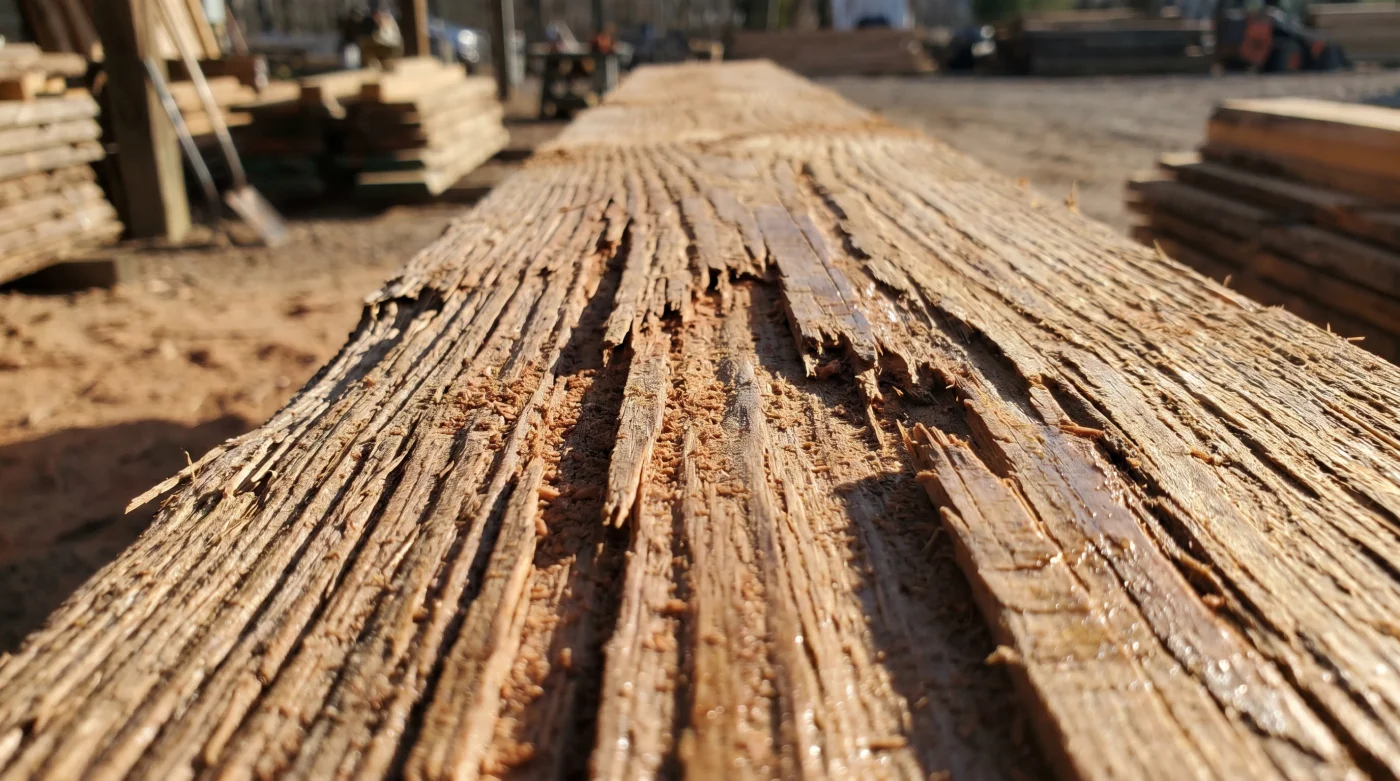
What if the fuzz and splinter of a raw board wasn’t a flaw, but a highly effective protective shield? You can source rough-sawn local cedar that perfectly matches the structural durability of those premium retail boards, cutting your materials budget cleanly in half. The raw texture holds oil, weathering the bitter elements with a stubborn, silent grace that chemically injected pine simply cannot replicate.
The Illusion of the Premium Label
Think of retail lumber like buying a pre-washed, pre-sliced apple wrapped in heavy plastic. You are no longer paying for the nutritional value of the fruit; you are paying for the plastic, the factory slicing, and the refrigeration. Big box hardware stores artificially inflate premium outdoor wood prices by charging you for the aggressive surfacing, the kiln drying, and the proprietary chemical pressure treatments. They convince you that a perfectly smooth, pale board is structurally superior, grading it solely on how cleanly it passed through a mechanical planer.
This is where the quiet magic of material arbitrage happens in your own backyard. Rough-sawn wood skips the commercial planer entirely, leaving the full dimensional thickness of the tree intact. By embracing the tactile, fuzzy surface of a freshly milled cedar beam, you bypass the retail markup completely. The natural oils fight rot, acting as a biological defense system that has kept deep forests standing for centuries before any human intervention.
Marcus Thorne, a 58-year-old custom timber framer working out of the wet, heavy air of the Pacific Northwest, stopped buying retail lumber two decades ago. He laughs at the perfectly smooth, pale green posts in the hardware store. Instead, he walks into a local mill, runs his calloused thumb over a stack of rough-sawn western red cedar smelling of damp earth and thick sap, and pays literally half of what the hardware store demands. He treats the rough surface like a thirsty sponge for natural raw linseed oil, building structural pergolas that outlast pressure-treated pine by a margin of decades.
You do not need Marcus’s decades of physical experience in the lumber yard to replicate his exact results. You only need to shift your understanding of what makes a material truly durable in the rain and snow. Embrace the true dimensions, realizing that a rough-sawn two-by-four is actually two full inches by four full inches, giving you significantly more heavy wood for your money.
- Heat pumps experience sudden inventory blackouts ahead of winter storms
- Copper wiring shortage forces massive shifts in home renovation costs
- Gutter guards accelerate roof rot by trapping microscopic shingle grit
- Compression nuts cause under-sink leaks due to excessive wrench tightening
- Mower blades dull faster when cutting wet morning grass layers
Adjusting to the Raw Material
Shifting your sourcing to rough-sawn cedar requires a slight, mindful change in how you plan your projects. The material behaves differently under the blade of a saw and against the skin of your hands, demanding a more deliberate approach to backyard construction.
For the Raised Bed Gardener, the absence of commercial chemical treatments is a massive, immediate victory. You never have to worry about heavy metals or strange preservatives leaching into the damp soil where your summer tomatoes grow. The thick, raw walls heavily insulate delicate plant roots from early spring frosts, holding moisture in the dark soil exactly where it belongs.
For the Deck Builder, rough-sawn lumber requires strategic, thoughtful placement. You still want the smooth, retail-milled boards or composite materials for the top surface where bare feet walk during a summer barbecue. However, you use the heavy, local rough-sawn cedar for the massive structural posts and joists hidden quietly underneath, saving hundreds of dollars on the unseen skeleton.
For the Exposed Pergola or deep property fence line, the fuzzy, splintered texture becomes your greatest aesthetic asset. When you brush a dark stain or a clear oil over the raw wood, it drinks the liquid in deeply rather than letting it sit on the surface. The grain absorbs the protection, creating a rich, deeply matte finish that flatly refuses to peel or flake in the punishing midday sun.
Sourcing and Mindful Application
Stepping into a local sawmill for the very first time feels entirely different from visiting a brightly lit retail store. There are no plastic shopping carts, no barcode scanners, and no bright yellow sale tags. You are buying directly from the source of the material, which requires a quiet, deliberate, and respectful approach.
Start by searching for independent sawmills or local agricultural woodworkers in your surrounding county. Call them early in the morning, before the heavy blades of the mill start running for the day. Ask for green rough-sawn cedar, clearly specifying that you need it for structural outdoor use, and they will gladly point you to the correct drying pile.
- Measure your vehicle’s weight capacity beforehand, as true-dimension wet wood is significantly heavier than dried retail lumber.
- Purchase your raw boards a few weeks before your project officially begins, stacking them with small wooden spacers to let the ambient air circulate and dry the heavy sap.
- Apply a simple, natural oil coating while the wood is still resting on your sawhorses, letting the rough grain pull the moisture deep into its core.
- Use heavy-duty structural screws rather than standard smooth nails, as the denser, thicker wood will quickly pull a thin nail out as it naturally settles.
Your tactical toolkit for this transition requires very little financial investment. You need a thick pair of leather work gloves to handle the sharp splinters, a heavy-duty masonry bristle brush to physically work the oil into the deep texture, and a simple handheld moisture meter to check the wood before you seal it. Patience replaces the premium price, allowing the raw wood to slowly acclimatize to the specific humidity of your yard.
Building Beyond the Barcode
Relying on local, raw materials fundamentally changes your daily relationship with the things you build with your own hands. When you stop depending on the homogenized, chemically altered inventory of a national retail chain, you step quietly back into a much older, more resilient tradition of local craft.
You start looking at the wooden structures around your home not as hastily assembled consumer products, but as living, breathing extensions of the local landscape. Sourcing heavy wood from the exact same climate where it will eventually rest brings a quiet, profound harmony to your outdoor spaces. You regain total creative control, knowing exactly where your materials grew and precisely how gracefully they will age.
“The tree already figured out exactly how to survive the freezing rain; we just have to stop milling away its natural armor.”
| Key Point | Detail | Added Value for the Reader |
|---|---|---|
| True Dimensions | Rough-sawn wood is not milled down (a 2×4 is exactly 2″x4″). | Gives you 20% more actual wood mass for massive structural rigidity. |
| Chemical Independence | Bypasses the harsh copper azole pressure treatment process entirely. | Creates a completely food-safe environment for organic vegetable garden beds. |
| Local Economics | Buying direct from a local mill completely cuts out the retail distributor. | Keeps your project budget remarkably low while securing a vastly superior material. |
Frequently Asked Questions
Will rough-sawn wood give me terrible splinters?
Yes, the initial surface is highly textured and sharp. Always wear thick leather gloves during the building process, though the wood naturally softens as it weathers over the years.
Do I need specialized tools to cut true-dimension lumber?
Your standard circular saw will work perfectly, though you may need to make two careful passes on thicker beams due to the extra mass and moisture.
How long should I let green cedar dry in my yard?
Give it at least three to four weeks stacked with wooden spacers in a covered, breezy area before you attempt to apply any penetrating oil or stain.
Is local cedar really as rot-resistant as treated pine?
Absolutely. The natural tannins and thick oils in cedar provide a biological resistance to ground moisture and insects that easily rivals modern chemical treatments.
Can I paint rough-sawn wood if I want a solid color?
You can, but a penetrating oil or semi-transparent stain is far better. The rough texture absorbs oil beautifully but can make solid acrylic paint quite difficult to apply evenly.