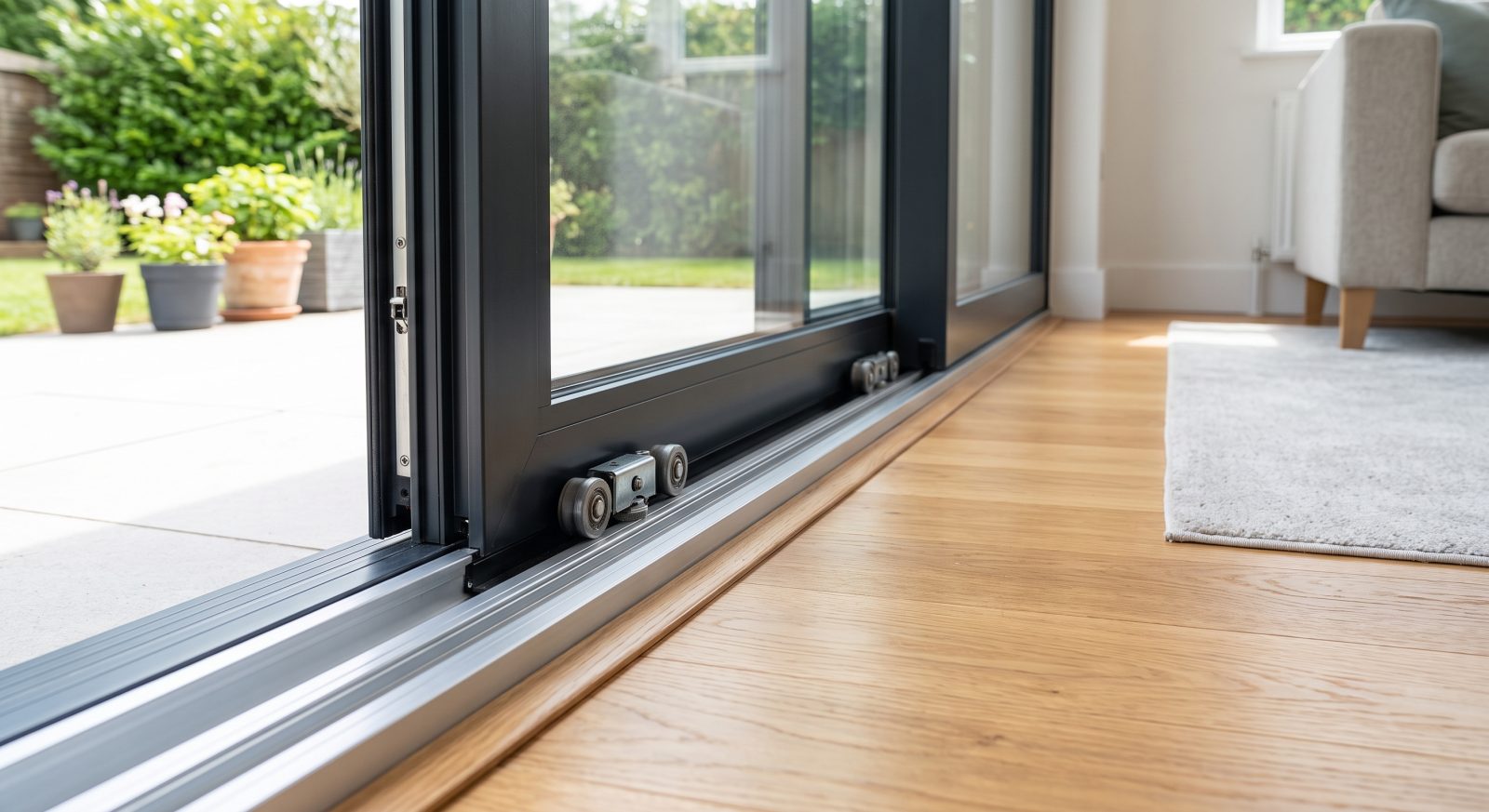
A sliding glass door depends on one deceptively simple relationship: the panel must travel level and true along its track so the weatherstripping compresses evenly against the frame every time it closes. When that alignment drifts, even by a few millimeters, the seal stops closing uniformly. Air, water, and dust find the gap, and over months the compression set in the weatherstripping becomes permanent — meaning no amount of re-adjustment will restore the seal once the material has been crushed unevenly for too long. This guide explains the mechanics of track alignment, how misalignment turns into permanent seal failure, and the inspection and adjustment steps that prevent it.
Why Track Alignment Controls Seal Performance
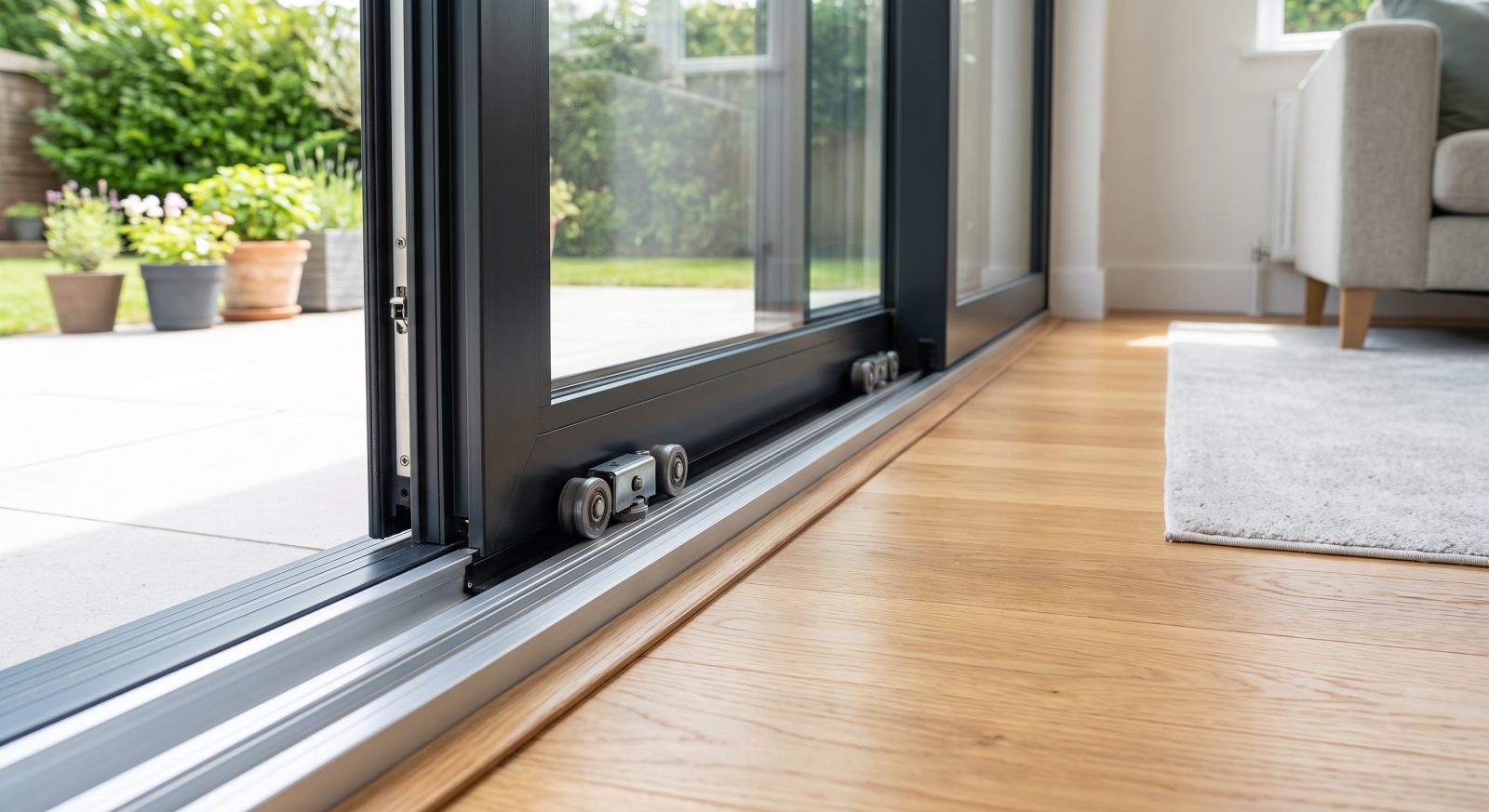
A sliding door panel is suspended on rollers that ride inside a bottom track, with a top guide keeping the panel from swinging outward. The weatherstripping — typically a wool pile or vinyl fin strip along the door’s leading edge, top, and bottom — is designed to compress by a specific, uniform amount across its entire length when the door reaches the closed position. That uniform compression only happens if the door hangs level and parallel to the jamb. If one roller sits lower than the other, or if the track itself is bent or sagging, the door closes at a slight angle, and the seal is compressed hard on one side while barely touching on the other.
Industry maintenance guides consistently point to the same diagnostic: check the vertical gap between the door edge and the frame when the door is nearly closed. An uneven gap — wider at the top than the bottom, or vice versa — is a direct sign that the door is out of alignment, and it’s a problem that affects both sliding smoothness and sealing performance according to sliding door repair specialists.
How Misalignment Becomes Permanent Seal Failure
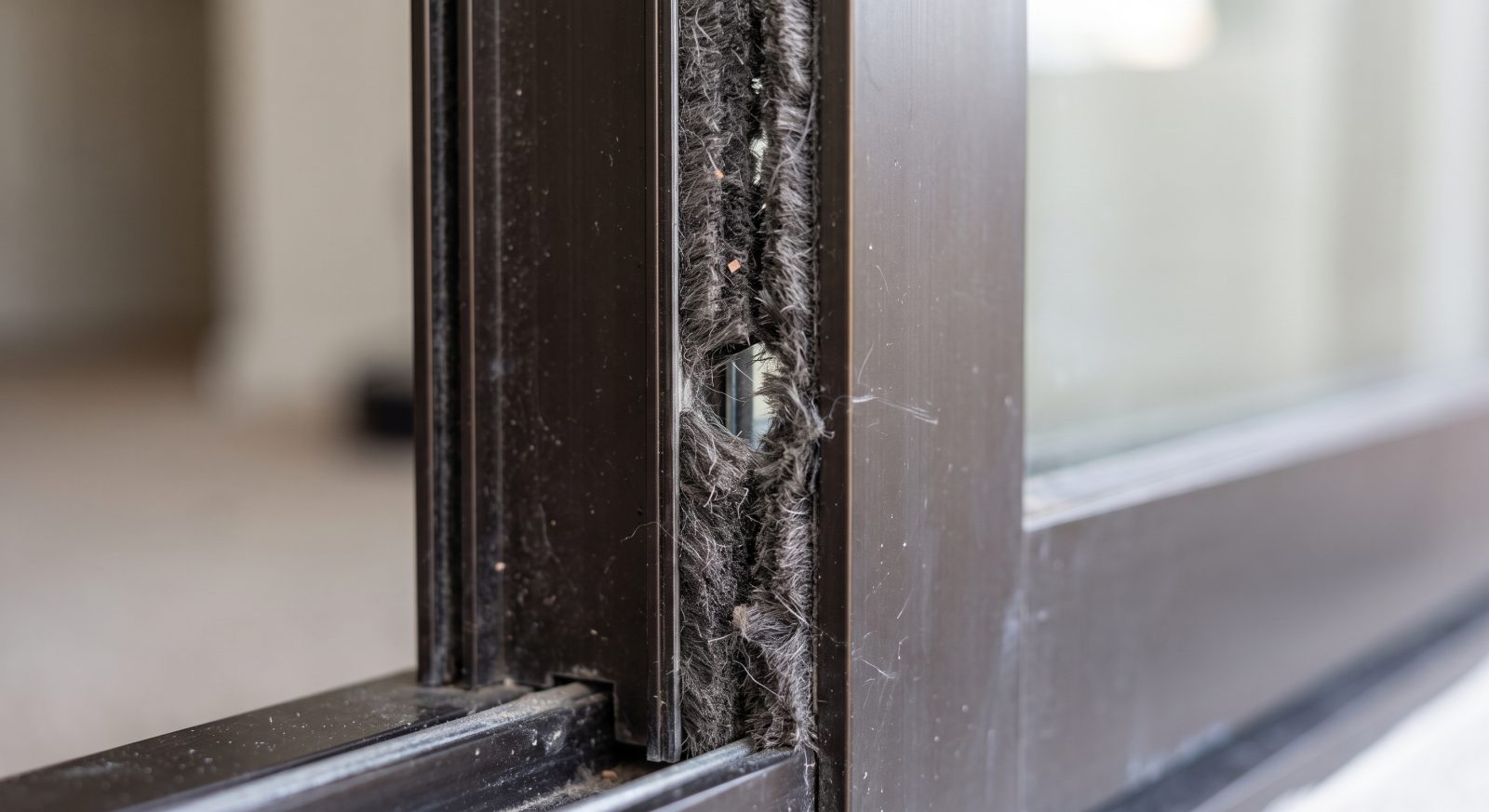
Weatherstripping materials are engineered for elastic recovery — they compress when the door closes and spring back when it opens, cycle after cycle. But elasticity has a shelf life. When a misaligned door repeatedly crushes one section of the seal far more than the design tolerance while leaving another section under-compressed, three things happen over time:
- The over-compressed section takes a permanent “set,” losing its ability to spring back to full thickness, similar to how a spring loses tension when overloaded repeatedly.
- The under-compressed section never seals at all, leaving a persistent air and water gap regardless of how the door is latched.
- Moisture that enters through the gap accelerates degradation of the weatherstripping material itself, along with any interior track components it contacts.
Once the compression set is permanent, adjusting the rollers back to level will not restore the seal — the material has already lost its elasticity in that zone. At that point, the only fix is full weatherstripping replacement, which requires removing the door panel from the track entirely as detailed in professional weatherstripping replacement procedures. This is why catching and correcting alignment drift early — before the seal takes a permanent set — is far cheaper and easier than replacing the weatherstripping later.
Diagnosing Alignment Problems Before Seal Damage Occurs
Most sliding doors provide a straightforward way to check alignment without special tools. The key indicators to check, in order, are:
- Vertical gap consistency: close the door until it’s almost shut and sight down the gap between door edge and jamb from top to bottom; it should be even along the entire height.
- Track condition: run a finger along the metal track (carefully) to feel for dents, flat spots, or bends, since a damaged track will misalign even freshly adjusted rollers per Florida sliding door repair guidance.
- Roller wear: inspect the rollers themselves for flat spots or seized bearings, which cause uneven travel even on a perfectly level track.
- Full-travel test: slide the door through its complete range at normal speed, listening for grinding and watching for binding, to confirm smooth guide engagement and consistent closing force as recommended in track and roller maintenance protocols.
Adjusting the Rollers to Restore Alignment
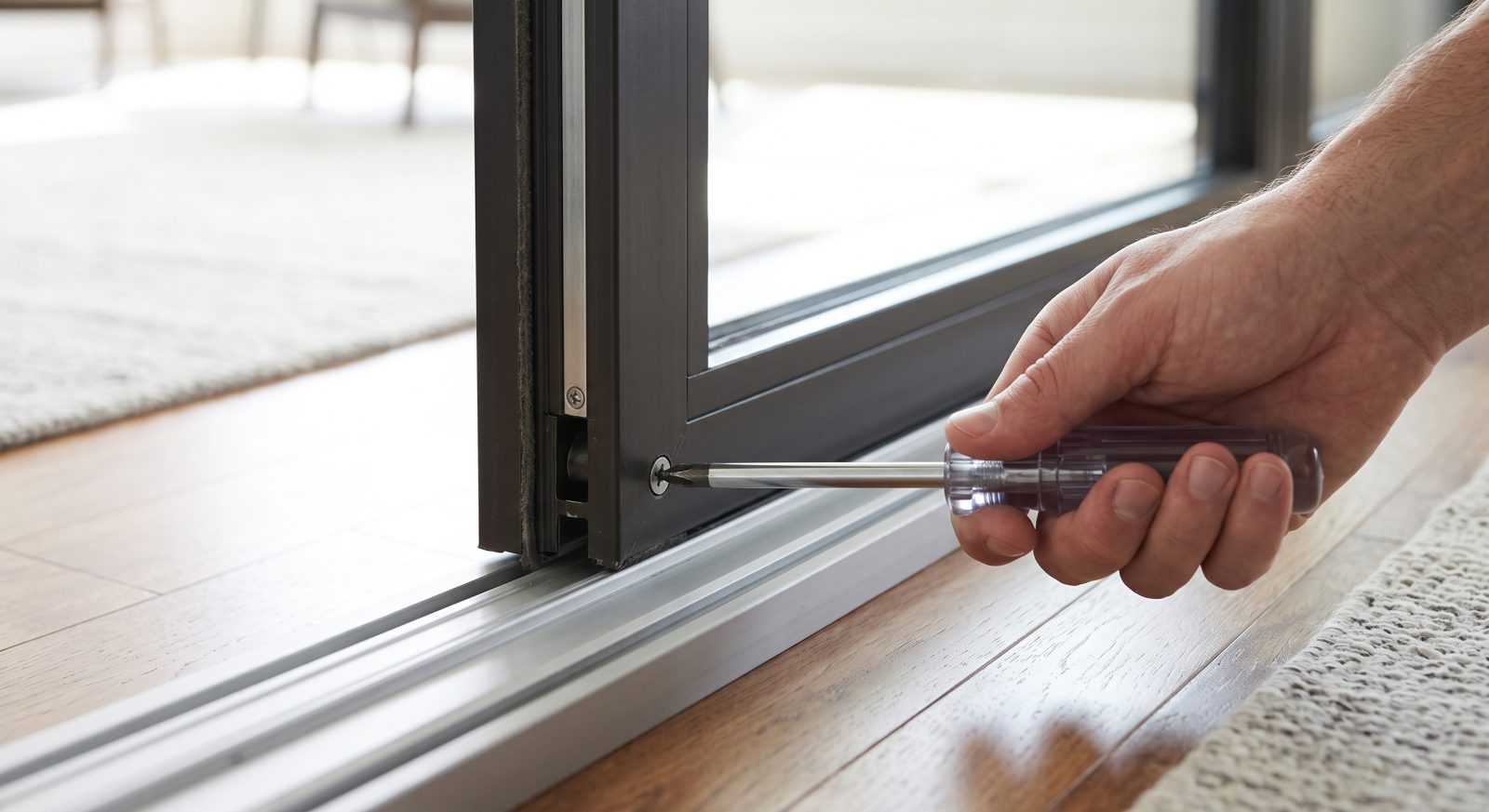
Most sliding glass doors have adjustment screws at the bottom of the door face or edge, sometimes hidden under small plastic plugs. Turning the screw clockwise typically raises that side of the door, while counterclockwise lowers it based on standard glass door adjustment procedures. The correct process follows these steps:
- Locate both roller adjustment screws — one near each bottom corner of the sliding panel.
- Make small, quarter-turn adjustments on one screw at a time rather than large turns, since even minor changes shift the door’s height significantly.
- Test the door after every quarter-turn by sliding it through its full range and checking the gap at the jamb.
- Adjust both rollers together so the door remains level, not just so one side closes tighter — adjusting only one side to compensate for a tilt often just shifts the uneven compression to a different spot on the seal.
- Once the vertical gap is even top to bottom, confirm the latch engages the strike plate cleanly and the weatherstripping shows uniform light resistance across its length following general sliding door repair instructions.
If roller adjustment alone cannot bring the gap into alignment, the cause is likely a bent track, worn-out rollers, or a settling frame — none of which a roller screw can fix. In these cases, a track cover or full roller replacement is typically necessary as outlined in sliding glass door maintenance references.
Track Cleanliness and Its Role in Alignment Drift
Debris buildup inside the track is one of the most common — and most preventable — causes of gradual misalignment. Sand, dirt, and grit accumulate in the track groove and act like ball bearings under the rollers, causing the door to ride at a slightly different height than intended, or to bind on one side while sliding freely on the other according to sliding door track maintenance specialists. A monthly vacuum with a crevice tool, followed by a deeper scrub with a mild soap or vinegar solution every few months, keeps the track surface consistent so the rollers travel true per detailed track cleaning tips.
After cleaning, the track must be completely dried before any lubricant is applied, since trapped moisture promotes corrosion that creates the very dents and rough spots that throw off roller alignment later as noted in professional maintenance guidance. A thin film of silicone-based spray lubricant — never oil-based products like WD-40, which attract grit — helps the rollers glide without adding resistance that could tug the door out of true alignment over time based on sliding door track repair parts guidance.
Recommended Maintenance Schedule
| Task | Frequency | Prevents |
|---|---|---|
| Track vacuuming | Monthly | Debris-induced roller misalignment |
| Deep track cleaning | Every 3–6 months | Corrosion, buildup that dents the track |
| Roller lubrication | Every 3–4 months | Roller drag and uneven travel |
| Gap and alignment check | Twice yearly (spring/fall) | Undetected seal compression damage |
| Weatherstripping inspection | Twice yearly | Progression from wear to permanent seal failure |
| Professional inspection | Annually | Structural track or frame issues beyond DIY adjustment |
Sources compiled from expertglassrepair.com [1], thepinnaclelist.com [2], floridaslidingglassdoorrepair.com [3].
When to Call a Professional
Homeowners can typically handle roller adjustment, track cleaning, and minor lubrication themselves. However, a bent or corroded track, a frame that has settled out of square, or weatherstripping that has already taken a permanent compression set all call for a professional door technician, since these issues require track replacement or full panel disassembly rather than simple adjustment per professional maintenance recommendations. Annual professional inspection catches the early structural issues that a homeowner’s visual check might miss according to sliding door repair specialists.