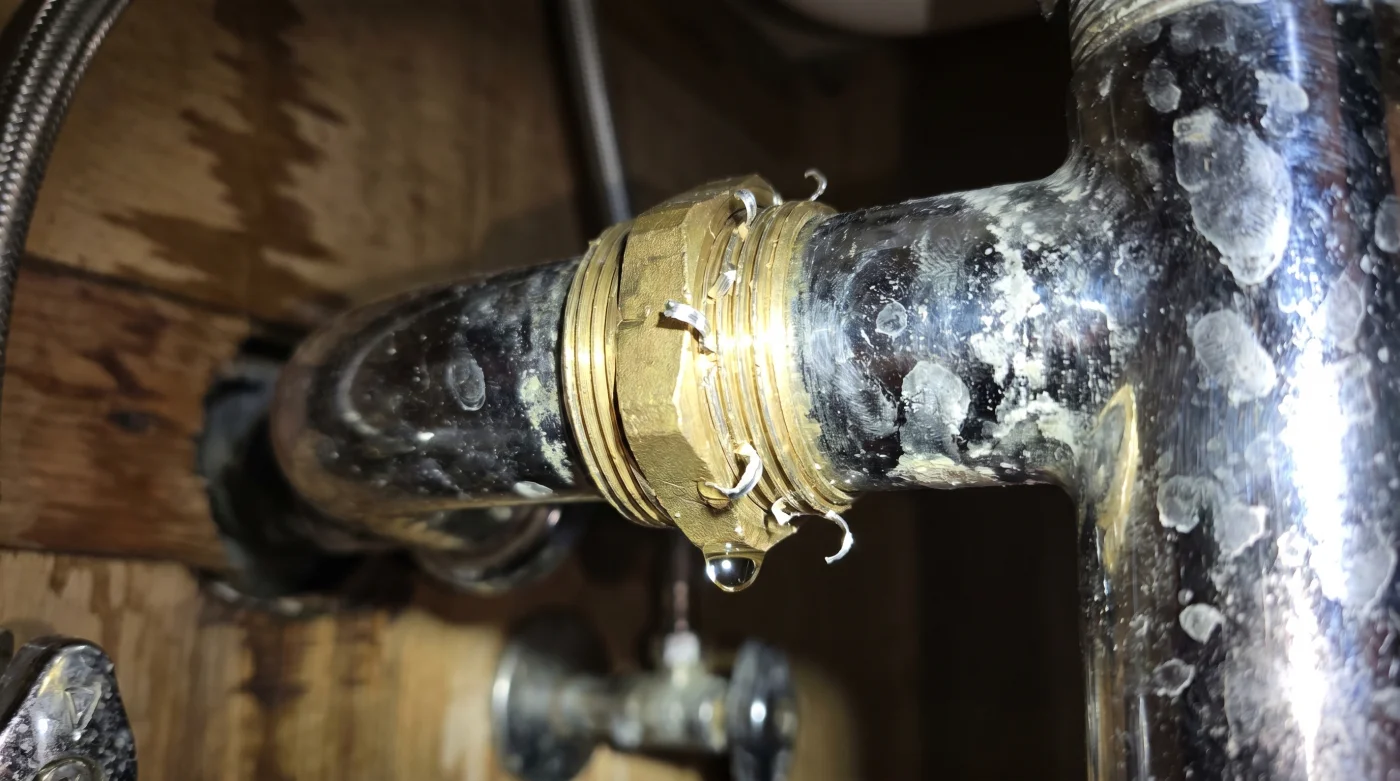
Picture the scene: you are wedged beneath the bathroom vanity, shoulders cramped against the cabinet frame, eyes straining in the harsh glare of a flashlight. The faint, metallic scent of damp copper and old water fills the air. You stare at the tiny bead of moisture forming on the edge of the shiny new compression nut, willing it to stop with sheer focus. The silence of the bathroom amplifies the slow, steady drip hitting the baseboard below.
You grab the heavy steel wrench. Just one more quarter-turn, you tell yourself, ignoring the tight, grinding resistance of the brass. You force the metal until it groans, convinced that brute strength is the only barrier between you and a ruined cabinet floor. It is a natural reaction; we view leaks as adversaries that need to be wrestled into submission.
But when you turn the water supply valve back on, the bead returns, pooling faster this time. The instinct to clamp down harder is universal, yet it is exactly what causes the entire system to fail. Seasoned plumbers know that the loudest, most damaging leaks do not come from loose fittings. They come from the quiet destruction of overworked threads.
The Anatomy of a False Seal
We are taught from an early age that tighter equals safer. It is the logic we apply to jar lids, lug nuts on a tire, and the knots in our shoelaces. But a compression joint operates on a completely different physical principle. It is less like bolting a heavy oak door and more like pressing a gentle thumb against a running garden hose to stop the flow. The goal is restriction through shape, not through force.
Inside that fitting sits a tiny, delicate brass ring called a ferrule. When tightened with proper care, it gently compresses against the wall of the pipe to form a seamless watertight barrier.
When you crush it with the leverage of a ten-inch wrench, the soft brass distorts. It warps into a subtle oval shape, creating microscopic channels for water pressure to escape. You are mangling the mechanism designed to protect your home from water damage.
I learned this the hard way from an old-school commercial pipefitter named Elias Thorne, a 68-year-old master plumber in Chicago who moved with the slow, deliberate grace of a vintage watchmaker. Watching him work under a cramped kitchen sink was a masterclass in restraint. He rarely used his wrench for anything more than a gentle final nudge. Instead, he relied completely on the sensitivity of his fingers and a specific, high-density silicone thread tape. He wrapped it with surgical precision, letting the engineered materials do the work they were cast to do, rather than bullying them into submission.
Matching the Method to the Material
Not all plumbing scenarios hidden in the dark corners under your sink behave the same way. Recognizing the subtle differences in your hardware dictates exactly how you should approach the repair to avoid stripping the delicate threads.
Older homes often feature stiff, oxidized copper supply lines. These require immense patience. Copper is surprisingly soft, meaning the brass ferrule bites into it very easily. If you over-crank the nut here, you risk crimping the pipe entirely, which requires a hacksaw to fix.
If your bathroom was updated recently, you likely have modern braided stainless steel hoses. These setups often come with flexible rubber gaskets built directly into the connecting nut. The moment you introduce the sharp teeth of a wrench to this setup, you tear the rubber gasket entirely. The seal needs to compress gently, not tear under the aggressive torsion of a hand tool.
Plastic threads on PVC traps are notoriously unforgiving. Cross-threading is the absolute enemy here. The tactile feedback of plastic is mushy and vague, making it nearly impossible to gauge torque with a heavy steel tool in your hand. Trust your hands completely when handling any PVC connections. Use your fingertips to find the natural groove of the thread before applying any rotational force.
The Hand-Tightened Guarantee
To achieve a flawless, zero-drip seal that will last for decades, you have to put the heavy tools away. This is a practice in mechanical minimalism. You are creating a delicate watertight barrier, not building a structural suspension bridge.
Start by wiping the threads completely clean with a dry, lint-free rag. Any grit will sabotage the connection you are trying to form, acting like harsh sandpaper against the smooth brass threads and ruining the seal before you even begin.
Next, introduce the professional secret weapon: high-density silicone thread tape. Unlike standard, flimsy white Teflon tape, which easily shreds, thins out, and bunches up, premium silicone tape conforms cleanly to the metal. It acts as both a friction-reducing lubricant and an impenetrable secondary seal without adding any bulky mass to the joint.
Here is your Tactical Toolkit for a perfect connection:
- Temperature check: Ensure the pipes are at room temperature. Cold brass contracts slightly, which gives false resistance and tricks you into thinking the nut is secure.
- Tape wrap: Apply exactly three tight wraps of silicone tape in the direction the nut turns, which is almost always clockwise. Keep the tape flat and avoid twisting it.
- Hand-tighten only: Thread the nut manually until you physically cannot turn it anymore with your bare fingers. Let your grip strength dictate the stopping point.
- The final nudge: If, and only if, a tiny drip appears under active water pressure, apply a wrench for a mere eighth of a turn. Stop immediately and check the flow again.
Restoring Trust in Your Own Walls
There is a very specific, quiet anxiety that lingers after an amateur plumbing repair. You find yourself opening the vanity door every few hours, shining your phone flashlight on the pipes, holding your breath while waiting for the inevitable drip. That lingering fear stems from a lack of control, from simply guessing the force that was actually enough.
When you master the gentle art of the compression fitting, that anxiety fades completely. You stop fighting your home’s aging infrastructure and start working in harmony with its physical limits. You trade brute strength for mechanical empathy. And in doing so, you reclaim a small but profoundly satisfying sense of mastery over the quiet, hidden systems that keep the space where you live functioning flawlessly.
The most reliable seal is never forged through aggression, but through the perfect alignment of compatible materials.
| Key Point | Detail | Added Value for the Reader |
|---|---|---|
| The Ferrule Trap | Brass rings warp under heavy wrench pressure. | Prevents you from destroying a brand-new fitting. |
| Silicone Tape | Provides a smooth, shred-free secondary seal. | Guarantees a watertight fit using only finger strength. |
| The 1/8th Turn Rule | A wrench is only used for micro-adjustments. | Eliminates the guesswork that leads to stripped threads. |
Frequently Asked Questions
Why is my new compression nut leaking even though it is tight?
You likely crushed the internal brass ferrule by over-tightening it. Once warped, it can no longer form a uniform seal against the pipe.Can I reuse an old brass ferrule?
No. Ferrules are designed to compress once. Reusing an old one almost guarantees a slow, persistent leak.Is silicone thread tape better than white Teflon?
Yes, for this specific application. It conforms better to the threads without shredding, offering a superior seal with less bulk.Do I need pipe dope with silicone tape?
Skip the pipe dope on compression fittings. The tape and the physical compression of the ferrule are all you need for a dry joint.How do I remove a stuck compression nut?
Apply a few drops of penetrating oil to the threads, wait ten minutes, and use two wrenches: one to hold the pipe steady and one to gently turn the nut.