You stand in the center of a gutted living room, breathing in the familiar scent of old pine and crushed drywall. The morning light cuts through the dust motes, illuminating the bare studs where your new life is supposed to take shape. You planned for the lumber costs, braced yourself for the plumbing delays, and picked out the tile months ago.
But the real shock arrives on a clipboard. You stare at the electrical estimate, blinking at a number that feels entirely disconnected from reality. A simple spool of 14/2 Romex, once an afterthought thrown into the back of a pickup truck, is now priced like a precious metal. Sudden logistics data confirms what every contractor already knows: the materials we take for granted are disappearing from the shelves.
We are standing in the middle of a massive structural pivot. The global supply chains that push copper out of the mines and into your local hardware store have buckled. What was once cheap and abundant is now guarded behind locked cages in the aisles.
You are forced to rethink the very veins of your house. Rather than halting your renovation entirely, this scarcity is pushing you toward a smarter, sleeker way to power your home. This constraint breeds better architecture, pushing us away from wasteful habits and toward precision.
The Anatomy of a Modern Circuit
For generations, the American approach to residential wiring was delightfully reckless. We treated copper like water from an endless well, pulling ‘home runs’ from every single outlet, switch, and fixture all the way down to the main breaker box in the basement. It was a sprawling, inefficient web of copper highways hidden behind the drywall.
That wasteful layout is dead. You have to start thinking of your electrical system like a city transit map. Instead of individual roads leading everywhere, you need localized hubs. Builders are abandoning traditional layouts to survive this market shift. The new standard is the localized conduit hub, a method that radically reduces the total linear footage required to light your rooms.
Elias Thorne, a 54-year-old master electrician in the Chicago suburbs, watched his material overhead triple in a matter of months. Instead of passing those crippling costs onto families trying to finish a kitchen, Elias changed the geometry of his installs. He began dropping sub-panels in strategic central closets, running a single, heavy-gauge feed from the basement, and spidering out short runs to the surrounding rooms. He treats every foot of wire like currency, effectively cutting his raw material requirements by thirty percent.
- Gutter guards accelerate roof rot by trapping microscopic shingle grit
- Compression nuts cause under-sink leaks due to excessive wrench tightening
- Mower blades dull faster when cutting wet morning grass layers
- Sump pump failure happens when discharge pipe angles ignore gravity
- Adhesive wallpaper fails without strict room temperature control protocols
You can adopt this exact mindset. By shifting your perspective from ‘running wires’ to ‘managing local power clusters,’ you insulate your budget from global market shocks. Your renovation survives the bottleneck because you stop relying on outdated, material-heavy methods.
Blueprinting Your Copper Conservation
Not every house demands the exact same electrical anatomy. How you adapt to the current shortage depends entirely on the scope of your open walls.
For the Gut-Renovator: If you are staring down completely bare studs, you have the greatest advantage. Plan a localized sub-panel on every floor. Run one thick feed up the central chase of the house. Keep your branching runs short, pulling power only from that local hub rather than dragging a dozen wires down three flights of stairs.
For the Targeted Upgrader: Maybe you are just remodeling a kitchen or finishing a basement. Do not try to tie every new appliance back to the main board. Feed a dedicated conduit pipe into the new space, establish a small breaker box specifically for that zone, and minimize the spiderweb of connections.
For the Smart Optimizer: Wireless technology is your greatest ally against physical scarcity. Instead of running switch-legs up the wall, across the ceiling, and down to a fixture, wire the power directly to the light. Use kinetic wireless switches mounted anywhere on the drywall to control them via radio frequency. You just saved fifty feet of wire per room.
Building the Localized Conduit Hub
Shifting to a hub-based system requires intentionality. You are no longer just making things work; you are engineering a highly efficient power grid. Keep your movements deliberate.
The process begins with a strict audit of your heavy-draw appliances. You need to know exactly where the power will pool. Draw your load map precisely before you ever pick up a drill.
- Identify the center of gravity: Find the closet or hallway closest to the highest density of outlets (usually near the kitchen or media room).
- Place the hub: Mount a 60-amp or 100-amp sub-panel in this central location.
- Pull the artery: Run a single, properly gauged feed line from your main basement panel to this new hub.
- Spider the branches: Run your 15-amp and 20-amp circuits out from the sub-panel, keeping no single run longer than twenty feet.
This tactical setup drastically cuts down your exposure to the fluctuating market. You buy exactly what you need, and not an inch more.
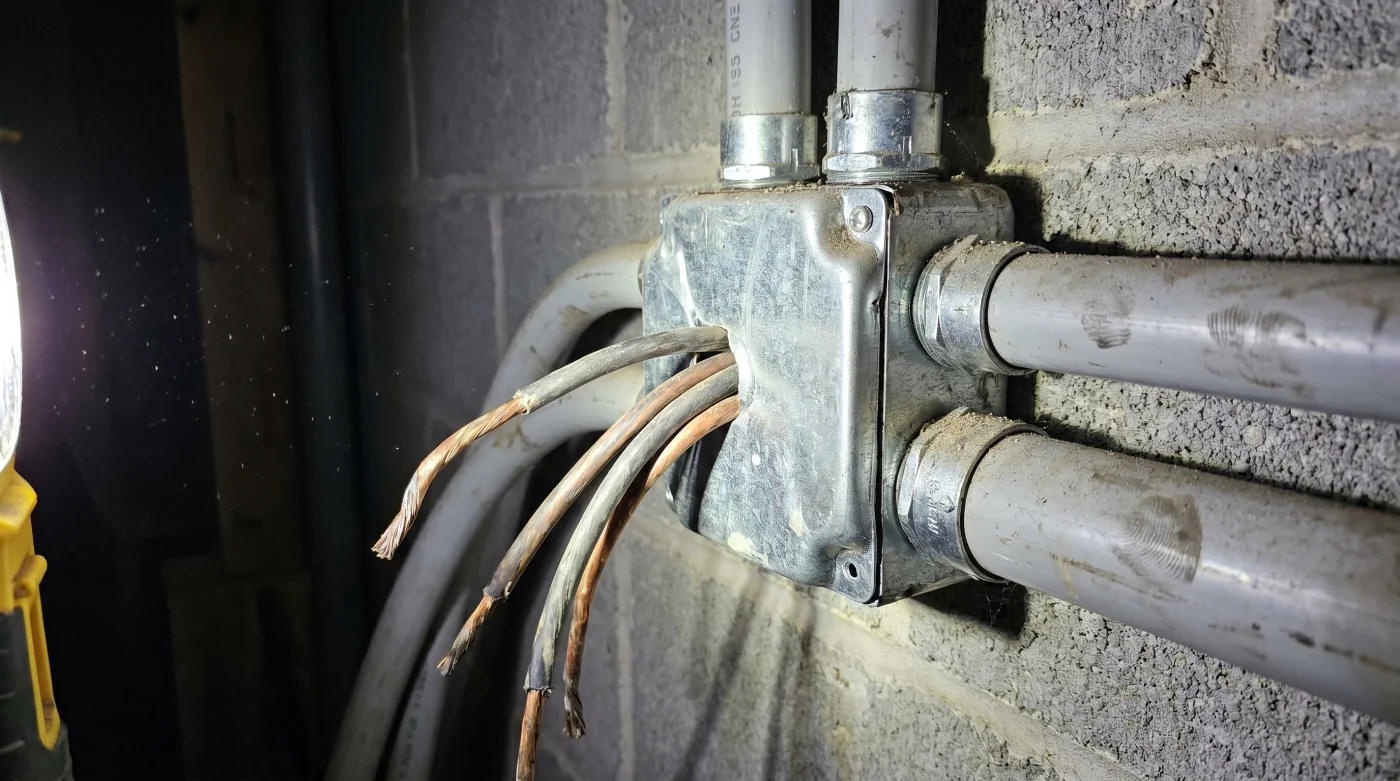
The Tactical Toolkit: Keep your sub-panel runs strictly horizontal or vertical to avoid confusing paths. Calculate your total amperage needs using the 80 percent rule (never load a breaker past 80 percent capacity). Rely on EMT conduit where exposed to allow for easy wire upgrades later without ripping open drywall.
Finding Freedom in Scarcity
It is easy to look at the empty shelves and skyrocketing estimates with a sense of defeat. Building or fixing a house is deeply personal, and when external forces threaten that process, it feels incredibly frustrating.
Yet, stepping back, there is a distinct beauty in being forced to optimize. You are no longer stuffing your walls with a tangled, undocumented mess of excess material. You are building an elegant machine. A localized, hub-based system isn’t just a reaction to a market panic; it is objectively better engineering.
When the dust finally settles and the drywall goes up, you will flip a switch and the room will flood with light, just like it always would have. But behind the paint, the bones of your home will be leaner, smarter, and infinitely easier to manage in the decades to come.
You took a stressful global bottleneck and turned it into a masterclass in residential design. That peace of mind remains long after the market stabilizes.
“A smart house isn’t defined by the gadgets you plug in, but by the quiet efficiency of the wires hidden behind the paint.”
| Key Point | Detail | Added Value for the Reader |
|---|---|---|
| The Home-Run Method | Running every circuit back to the main basement panel. | Identifies the outdated practice draining your renovation budget. |
| Localized Conduit Hubs | Placing sub-panels near heavy-use rooms to shorten wire runs. | Cuts raw material costs by up to 30 percent while improving system safety. |
| Kinetic Wireless Switching | Using RF switches instead of hardwiring wall toggles. | Eliminates complex wall drops, saving labor and costly copper wire. |
Frequently Asked Questions
Is it legal to use a sub-panel for a single room remodel?
Yes, as long as it meets local code and is properly rated for the amperage, a sub-panel is a perfectly safe and legal way to localize power.Will a localized hub system decrease the value of my home?
Not at all. In fact, a cleanly mapped, hub-based electrical layout is often seen as a premium upgrade by modern inspectors and buyers.How much copper wire do kinetic switches actually save?
By removing the physical switch-leg loop that runs from the fixture down the wall, you can save 20 to 50 feet of wiring per room.Are global supply chain issues for copper going to end soon?
Market data suggests continued volatility. Adapting your building habits now protects you regardless of how the commodity markets shift.Can I install a localized conduit hub myself?
While you can certainly plan the layout and map the loads, the actual panel tie-in should always be executed by a licensed electrician to ensure your family’s safety.