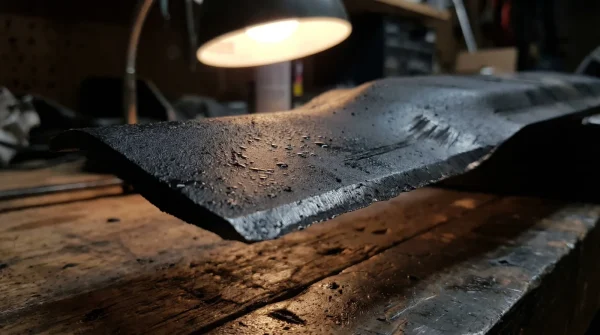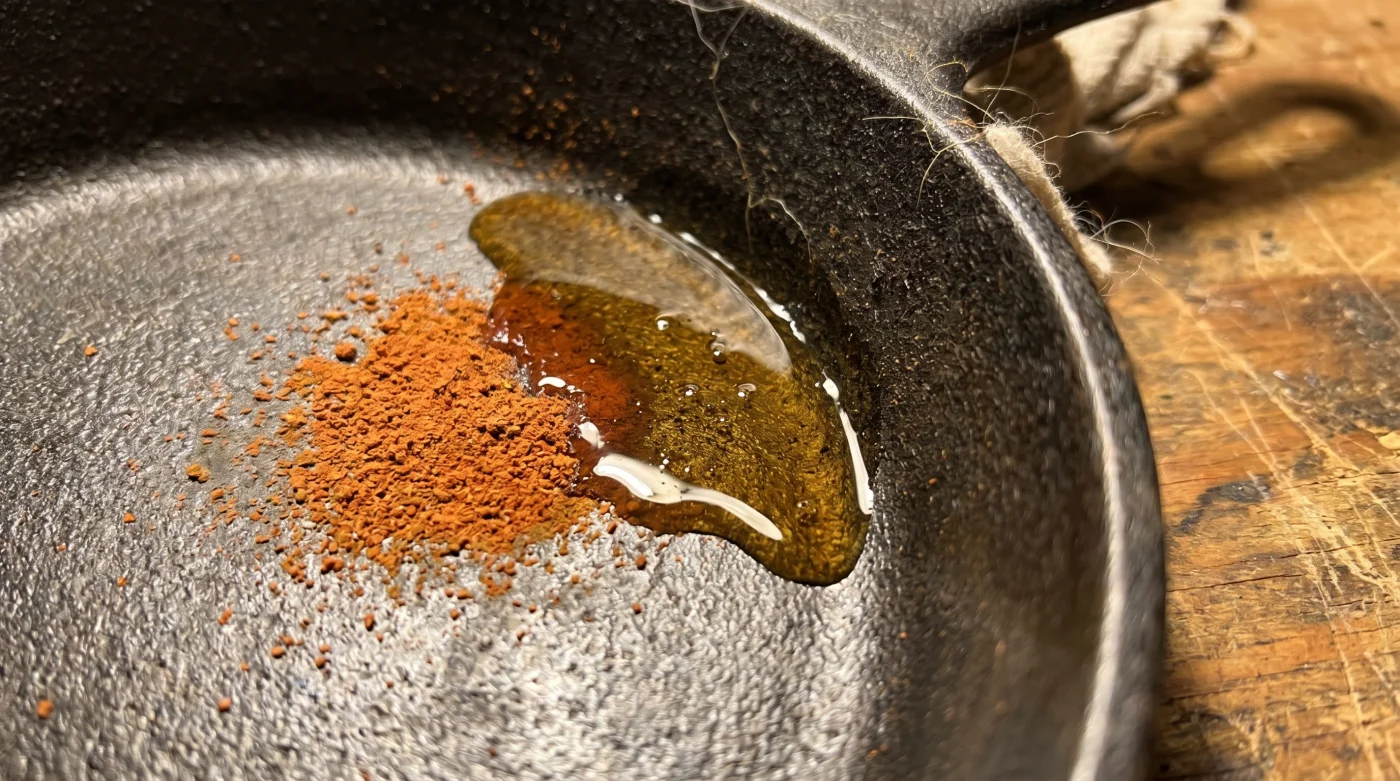
You pull the heavy skillet from the back of the cabinet, feeling the familiar, dense weight settling into your wrist. Your fingers trace the dry, mottled surface. In the harsh morning light, the gray patches look like bruises against the black iron. There is a faint, metallic tang in the air, the unmistakable scent of exposed iron waiting to surrender to the ambient humidity of your kitchen. This is the precise moment most people reach for the steel wool, determined to scrub the pan back to a pristine, uniform state.
But that violent friction is exactly what caused the damage in the first place. When you aggressively scour the surface, you are not just cleaning away last night’s dinner remnants. You have entirely scraped away the living skin of the pan, removing the foundational seasoning layer entirely and exposing the vulnerable metal underneath to immediate, rapid oxidation.
The old iron breathes. Without its protective coating, it absorbs moisture from the air in a matter of minutes. That faint orange bloom you see forming near the base of the handle isn’t just surface dirt; it is molecular rust taking root in the microscopic valleys of the metal, threatening to eat away at the pan’s structural integrity.
Instead of treating the pan like a dirty plate that needs to be sanitized, you need to treat it like dry, porous wood that desperately needs to drink. The secret to an egg-sliding, glass-like finish isn’t found in harder scrubbing. It lies in building microscopic polymer chains that bond directly with the iron, creating a smooth surface far stronger than the raw metal alone.
The Living Matrix: Rebuilding from the Iron Up
We tend to think of cast iron seasoning as a coat of paint, a hard shell that sits passively on top of the metal. If it chips or flakes, we instantly assume the pan is ruined or that the manufacturing was defective. But true seasoning is a chemical transformation, a living matrix. When subjected to intense heat, the right fats undergo polymerization, shifting from a liquid into a hard, plastic-like solid that fills every pore.
The frustrating truth about bare cast iron—that it rusts almost instantly when exposed to the air—is actually its most remarkable, hidden feature. This hyper-reactivity means the metal is highly porous and hungry. It actively wants to bind with fats. The vulnerability of the raw iron is what allows it to hold onto the oil so tightly, transforming a mundane structural flaw into a permanent, non-stick advantage.
Silas Thorne, a 62-year-old cast iron restorer operating out of a drafty, wood-heated barn in coastal Maine, handles hundreds of rusted, neglected skillets every single year. ‘People bring me pans that have been stripped bare and left for dead in damp basements,’ he says, running a calloused thumb over the rim of a century-old Griswold skillet. Silas doesn’t use harsh chemicals or wire wheels. He relies on a specific rhythm of heat and a carefully chosen trio of natural oils, treating the iron not as cold metal, but as a porous skin that needs to be fed in deliberate layers.
Adjustment Layers: Reading the Iron
Not every skillet requires the exact same approach. The current state of your iron dictates the intensity of the restoration process. You have to read the texture of the surface before you even think about pouring a single drop of oil.
For the thrift store rescue, where the pan is entirely stripped, bone-dry, and showing patches of raw gray metal, you need to focus on the foundational build. This requires high heat and absolute patience, layering the base oil thinly until the pan slowly takes on a dark gloss. The iron will smoke heavily, and your kitchen will smell rich and roasted, but this is merely the sound and scent of the polymer chains locking into place.
For the daily workhorse that just has a few dry, silver spots from an overly acidic tomato sauce or a rough metal spatula, you are simply patching the existing matrix. A lighter, more delicate touch is needed here. You are not baking the pan for hours in a roaring oven; you are gently coaxing a maintenance layer into the weakened spots over a low stovetop burner, sealing the microscopic cracks before molecular rust can establish a dangerous foothold.
Then there is the heirloom piece, passed down through generations, which holds decades of thick, uneven carbon buildup. For the purist handling this type of pan, the goal is careful reduction rather than building. You must gently dissolve the uneven carbon without disturbing the strong polymer chains underneath, preserving the historical patina while restoring its glass-like cooking surface.
Mindful Application: The Three-Oil Strategy
Standard vegetable oil is far too soft to build a durable base, and standard extra virgin olive oil burns much too quickly. To truly restore a stripped skillet, you need a specific three-oil blend that serves three distinct structural purposes. The flaxseed oil creates the hard, unyielding foundation. The grapeseed oil provides high-heat flexibility so the seasoning doesn’t chip. Finally, a minuscule touch of beeswax or beef tallow seals the top layer against moisture.
The application process is quiet, methodical, and requires your full, undivided attention. You absolutely cannot rush the polymerization process by pouring more oil. If you allow the fats to pool in the corners of the pan, they will turn into a sticky, uneven mess that closely resembles tree sap. The goal is to wipe the pan so thoroughly with your cloth that it miraculously looks entirely dry before baking.
- The Tactical Toolkit: A base coat of pure, organic flaxseed oil, a mid-coat of grapeseed oil, and a finishing rub of natural beeswax.
- Temperature: 450°F, or just past the specific smoke point of your chosen base oil, to ensure the chemical reaction occurs.
- Timing: Exactly one hour of baking at peak temperature, followed by two full hours of slow cooling inside the closed, dark oven.
- The Technique: Apply exactly three drops of the blended oils. Rub it vigorously into the metal with a lint-free cotton cloth. Buff it out with a secondary clean cloth until the surface looks completely dull and matte. Bake. Repeat this exact process three times.
Beyond the Pan: The Weight of Maintenance
There is a profound, undeniable grounding effect in caring for something physical that will likely outlive you. In a modern kitchen filled with fragile, chemically treated non-stick pans that degrade, scratch, and eventually get thrown away every few years, the heavy black iron sits on the stove as a quiet rebellion. It demands a bit of your time, a fraction of your heat, and an intuitive understanding of its wild nature.
When you take the mindful time to wipe the warm iron, watching the dark, glassy surface slowly emerge from the dry, vulnerable gray metal, you are actively participating in a quiet ritual. You are not just preparing to cook breakfast or sear a steak; you are deliberately tending to a tool that, if treated with this specific, respectful care, will reliably cook warm meals for people you will never even meet.
Cooking on cast iron is a continuous, quiet conversation between the heavy metal, the intense heat, and the nourishing oil you offer it.
| Key Point | Detail | Added Value for the Reader |
|---|---|---|
| Foundational Stripping | Standard scouring completely removes the protective layer. | Prevents accidental damage to the iron’s delicate living matrix. |
| Polymer Chains | Flaxseed oil creates a hard, plastic-like bond at 450°F. | Delivers a smooth, glass-like cooking surface that eggs slide across easily. |
| Molecular Rust | Bare iron oxidizes rapidly in ambient kitchen humidity. | Highlights the absolute urgency of immediate sealing after cleaning. |
Is the skillet ruined if it rusted overnight?
No, surface rust is merely a natural sign that the metal is bare and hungry for oil; it can be gently scrubbed away and effectively re-seasoned.Why is my pan sticky to the touch after baking?
You left too much oil on the surface before baking; the pan must be buffed with a clean cloth until it looks completely dry and matte.Can I use extra virgin olive oil for this?
Olive oil has a low smoke point and degrades far too quickly to form a durable, lasting polymer chain on the iron.How often should I apply the three-oil blend?
Reserve the full three-oil process for complete restorations, while using just a single drop of grapeseed oil for daily stovetop maintenance.Does modern dish soap destroy the seasoning?
Modern dish soap is incredibly mild and will not harm a properly polymerized chain, though aggressive scrubbing with abrasive pads certainly will.