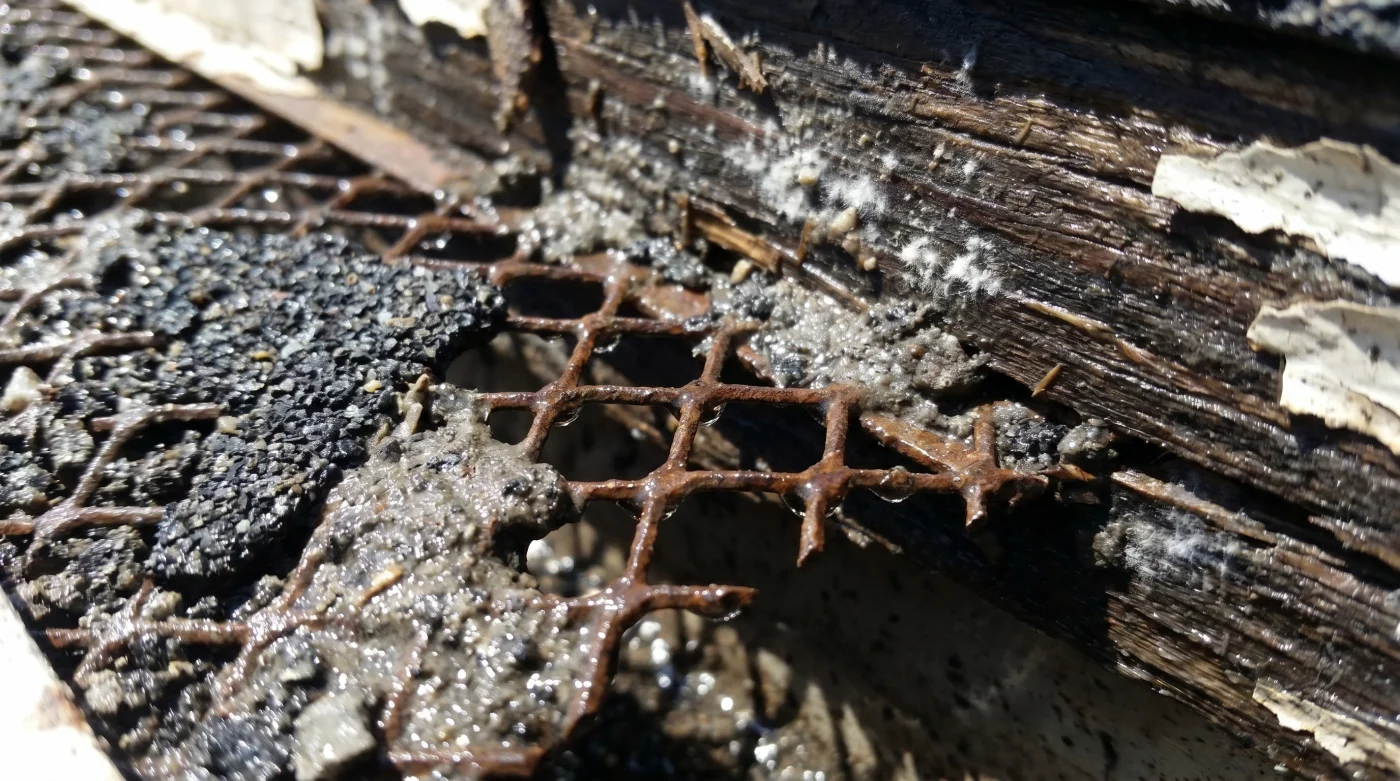
Imagine standing on your front porch during a heavy November downpour. The sound should be a clean, rushing waterfall safely channeled away from your foundation and into the storm drains. Instead, you notice a slow, heavy drip creeping behind the aluminum edge of your roofline, staining the painted wood. You installed fine-mesh gutter guards three years ago to stop the weekend ladder chores, assuming you had permanently solved the problem.
But that quiet, unseen decay is taking hold right above your head. The promise of a maintenance-free autumn has masked a structural threat that is slowly digesting the very edge of your home. You trusted the system to filter out the environment, unaware that it was capturing something far more damaging than autumn leaves.
When you finally climb up a ladder to inspect the system, the reality is startling. The protective mesh isn’t blocked by broad oak leaves or snapping twigs. It is suffocated by a dense, muddy paste. This gray sludge is microscopic shingle grit, bound together with pollen and morning dew, turning your expensive protective screen into an unyielding dam.
The Myth of the Impenetrable Shield
We tend to treat our homes like fortresses, believing that if we can just seal every gap and cover every trough, nature will stay outside. But a house is an organic system that relies on constant air circulation to survive. By capping your gutters with micro-mesh, you haven’t just blocked the debris; you have forced your roofline to breathe through a wet blanket.
Think of your fascia board—the long, painted wooden plank holding your gutters—as the lungs of your roofline. It needs moving air to dry out rapidly after a storm passes. When fine mesh traps that abrasive asphalt grit, it forms a permanent sponge resting directly against the metal drip edge.
Instead of water flowing away, moisture wicks backward into the wood fibers. The very feature marketed to protect your home is accelerating the structural decay, trapping humidity in a dark crevice where the afternoon sun can never reach it. The vulnerability of an open gutter isn’t a design flaw; it is a necessary, breathable mechanism for airflow and proper drainage.
Ask Marcus Thorne, a 58-year-old restoration carpenter working out of the damp, rain-heavy neighborhoods of Portland, Oregon. Over three decades, Marcus has replaced thousands of linear feet of rotted fascia and roof decking. Five years ago, he noticed a troubling pattern: the worst, most aggressive wood rot wasn’t happening on neglected, leaf-choked gutters, but on high-end, mesh-guarded systems.
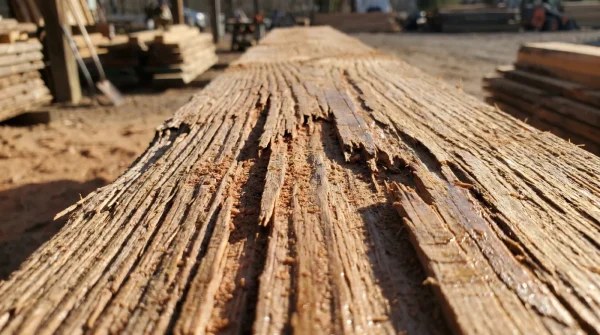
“People pay thousands of dollars to put a lid on their gutters,” Marcus notes, pulling a crumbled piece of black, spongy pine decking from his truck bed. “But asphalt shingles shed tons of tiny, sharp granules every time it rains. The mesh catches the sand, the sand holds the rain against the fascia, and within three seasons, the wood turns to wet oatmeal.”
- Compression nuts cause under-sink leaks due to excessive wrench tightening
- Mower blades dull faster when cutting wet morning grass layers
- Sump pump failure happens when discharge pipe angles ignore gravity
- Adhesive wallpaper fails without strict room temperature control protocols
- Cast iron skillet restoration requires this specific three oil blend
Adapting to Your Specific Canopy
Understanding how to manage your roof runoff depends heavily on what sits directly above it. You have to evaluate the specific debris profile of your property to avoid the grit-sponge effect and keep the wood sound.
For the Aging Asphalt Roof
If your shingles are more than ten years old, they are shedding protective granules at an accelerated rate. In this scenario, you face the highest risk of fascia rot. A fine mesh guard will clog completely within a single season, turning into a rigid mud-flap. Your priority isn’t blocking leaves; it’s allowing that heavy, sandy grit to wash out completely into the downspout.
For the Heavy Canopy Lot
Homes surrounded by towering pines or shedding maples face a dual threat. Needles and broad leaves mat over the top of the grit, creating a two-tier compost bin suspended on your roofline.
Here, the solution isn’t a finer screen, but rather an aggressive pitch and natural velocity. You need the water to move fast enough to self-scour the trough, pushing the heavy debris out before it can settle and decompose.
For the Desert or Dry Climate Home
You might assume wood rot isn’t a concern in environments with minimal rain. But morning dew mixes with airborne dust and roof sand, baking into a hard, ceramic-like crust over the mesh under the intense afternoon sun.
When the rare, heavy thunderstorm does finally hit, the water sheets completely over the edge, entirely missing the gutter and flooding your foundation. The very mechanism meant to catch the water repels it.
Restoring Flow and Adjusting Pitch
The fix isn’t another expensive installation or a high-tech coating; it is a return to fundamental mechanics. By removing the restrictive mesh and letting gravity do the heavy lifting, you allow the home to function naturally.
By removing the barrier, the natural drying cycle returns to your roofline. Here is how to reclaim your fascia board’s health using mindful, minimalist actions:
- Remove the barrier: Carefully unscrew the fine mesh panels. If they are heavily mortared with grit, use a stiff nylon brush to break the crust before lifting them away to avoid bending the gutter lip.
- Inspect the drip edge: Check the metal flashing that bridges the gap between the shingles and the gutter. Run your fingers along the wood behind it. If the wood feels soft to the touch, leave it exposed to open air for a full week of dry weather to harden.
- The water test: Run a garden hose at the highest point of the gutter. The water should not pool or stagnate. It should pull immediately and forcefully toward the downspout.
- Adjust the pitch: Loosen the hidden hangers and drop the downspout end of the gutter slightly. You want a pitch of exactly half an inch for every ten feet of gutter run to ensure self-cleaning velocity.
The Tactical Toolkit:
- Cordless drill with a quarter-inch hex driver.
- A 9-inch magnetic torpedo level.
- A stiff nylon masonry brush.
- A reliable 25-foot measuring tape.
Working With Gravity, Not Against It
There is a profound peace of mind that comes from understanding exactly how your home handles the elements. When you strip away the gimmicks and marketing promises, you are left with the honest, physical reality of water seeking its lowest possible point.
By embracing the open trough, you are accepting a seasonal rhythm. Yes, you may need to clear the leaves twice a year, but you are trading a tedious weekend chore for decades of structural integrity. You are allowing your house to breathe, to dry, and to withstand the weather exactly as the original carpenters framed it to do.
Letting the water carry the grit away feels less like maintenance and more like stewardship. It is the quiet satisfaction of knowing the bones of your home remain solid, dry, and secure under the passing clouds.
“The moment you try to build a dam on a roofline, water will find the path of least resistance—and that path usually leads straight into your woodwork.”
| Key Point | Detail | Added Value for the Reader |
|---|---|---|
| The Grit Sponge Effect | Fine mesh traps microscopic asphalt granules, holding water against the wood. | Prevents silent, catastrophic decay of your fascia board and roof decking. |
| Proper Gutter Pitch | Set a slope of 0.5 inches per 10 feet of run. | Uses gravity and water velocity to naturally scour the gutter clean. |
| Airflow over Filtration | Open gutters allow wind to dry the drip edge after storms. | Replaces false security with active, structural longevity and peace of mind. |
Frequent Troubleshooting Questions
How do I know if my fascia board is already rotting?
Look for peeling paint directly behind the gutter, or press a screwdriver gently into the wood from below; if it sinks in without resistance, the wood is compromised.Can I just pressure wash the fine mesh to clean it?
Pressure washing can blast the grit out, but it often forces water up under your shingles in the process, risking severe attic leaks.Are there any gutter guards that don’t trap shingle grit?
Reverse-curve or surface-tension helmets perform better with grit, but they still alter the natural airflow and can struggle during torrential downpours.Why did my roofing contractor recommend mesh guards?
They excel at keeping broad leaves out of the downspouts, which is a highly visible problem, whereas grit buildup is a slow, invisible issue most contractors don’t track over decades.Will adjusting the pitch make my gutters look crooked?
A proper pitch of a half-inch over ten feet is completely imperceptible from the ground, but it radically changes the physics of the water flow.