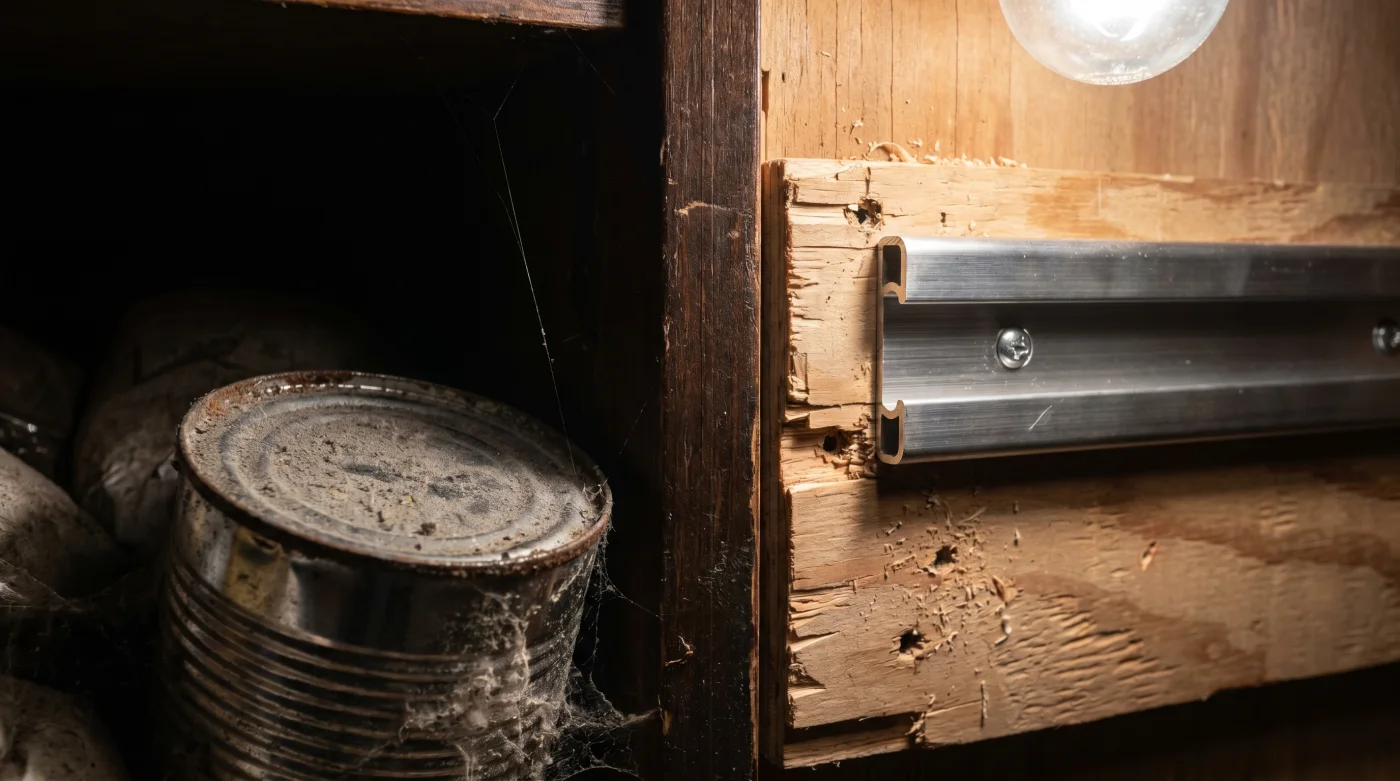
You stand in the kitchen bathed in the hum of the refrigerator. You reach for a simple can of crushed tomatoes, but your fingers meet the cold, dusty rim of a forgotten soup tin from three Thanksgivings ago. It is tucked into the shadows, a casualty of the deep, cavernous pantry shelf that builders somehow decided was the standard for modern homes.
Those twelve to eighteen inches of fiberboard stretching back to the drywall aren’t giving you more space. They hide your old food. When you push your groceries into that dim recess, you are creating an archaeological dig site. The front row is the present day, brightly lit and accessible. The back row is a timeline of expired aspirations, abandoned beans, and crystallizing honey.
We often blame ourselves for this waste, assuming our organizational skills are just lacking. But the structure itself is fighting your memory. When you cannot see what you own without moving three other things, your brain simply stops registering that the item exists.
Think of your pantry not as a storage unit, but as a visual dashboard. Deep shelves are geometric traps designed to swallow small items whole. If the dials on a car dashboard were stacked behind one another, you would never know how fast you were going. The same logic applies to your canned goods and dry staples. The moment one item eclipses another, your inventory system breaks down.
The Architecture of Forgetfulness
This is where the magic of shallow modular tracks changes the physical reality of your kitchen. Instead of fighting the depth, you lean into a deliberate shallowness. By installing shelving that is only four to six inches deep—just enough for a single can or mason jar—you force the system to work for you. Every label faces forward. Every expiration date is accounted for.
It feels counterintuitive to solve a space issue by technically reducing the square footage of your shelves. Yet, by stripping away the back half of the board, you gain immediate visual control. What you lose in cubic inches, you recover instantly in mental clarity and zero food waste. The mundane detail of shelf depth suddenly becomes your greatest asset.
Consider the workflow of Marcus Thorne, a 42-year-old high-volume prep chef out of Chicago. In his commercial kitchens, a deep shelf is considered a fireable offense because it breeds mold and ruins profit margins. Marcus spends his weekends retrofitting residential pantries for his friends, ripping out standard twelve-inch builder-grade MDF boards and replacing them with slender, staggered metal tracks.
- Treated lumber grading hides cheaper structural wood alternatives entirely
- Heat pumps experience sudden inventory blackouts ahead of winter storms
- Copper wiring shortage forces massive shifts in home renovation costs
- Gutter guards accelerate roof rot by trapping microscopic shingle grit
- Compression nuts cause under-sink leaks due to excessive wrench tightening
“If I have to move a jar of capers to find the olive oil,” Marcus says, “the kitchen is already failing me.” He treats residential pantries with the exact same brutal efficiency. Every ingredient sits up front. He ensures that nothing is allowed to hide in the shadows of a deeper shelf.
Adjusting the System for Your Space
Not every kitchen behaves the same way, and the way you implement shallow tracking depends entirely on your daily rhythms and physical footprint. For the culinary purist, you likely have dozens of spices, specialty vinegars, and specific canned imports. You need aggressive micro-segmentation.
Install tiered, three-inch-deep track shelving directly on the inside of your pantry door. Leave nothing to the imagination. Group your items by regional cuisine so that when you stand back, the recipe practically writes itself in your field of vision.
If your household relies on large-scale purchases, shallow shelves might seem terrifying. The trick here is vertical translation. Keep your floor-level bins for the massive sacks of rice and flour, but transition immediately to six-inch modular tracks from the waist up.
The overflow remains below, but the daily visual inventory stays sharp and single-file. Store daily decanted portions high. This prevents the frustration of moving ten-pound bags just to find a single can of diced green chilies.
For the Odd-Angle Kitchen
Many older homes have narrow, awkward closet pantries with dead corners that collect cobwebs. Instead of U-shaped shelving that traps items in the bends, install staggered, straight shallow tracks on alternating walls.
This allows you to stand in the center and rotate, pulling a can of coconut milk from the left and a jar of curry paste from the right. Break the continuous shelf line. You will never again have to dig into a dark corner just to finish making dinner.
Installing Your Tactile Inventory
Moving to a shallow track system requires a deliberate weekend afternoon. It is less about carpentry and more about resetting your relationship with your groceries. Treat the installation as a careful editing process. It should feel like clearing a choked airway.
Anchor into your wall studs.
- Empty the existing space completely and wipe down the bare walls.
- Locate studs; modular tracks require solid anchoring to support concentrated weight.
- Space your vertical rails horizontally every sixteen inches.
- Set your shelf heights tightly around your tallest items, leaving an inch of clearance.
The Tactical Toolkit: You will need a stud finder, a basic laser level to ensure the tracks don’t slant, two-inch wood screws, and custom-cut pine or metal shelving boards ripped to exactly five inches deep. Keep a measuring tape handy to check the exact height of your items.
When you finally step back and look at your new pantry, something shifts in your chest. The overwhelming wall is gone. In its place is a quiet, structured library of ingredients that invites you to cook rather than stresses you out.
The Calm of Absolute Visibility
You no longer buy a fourth jar of cumin because you couldn’t find the first three. By stripping away the excess depth that builders default to, you have crafted an environment that respects your time and your resources.
Cooking becomes a fluid motion rather than a frustrating search. The system remembers for you. You open the door, your eyes scan the single-file labels, and your hands know exactly where to reach. The architecture of your kitchen is finally aligned with the way your mind naturally works.
“When you can see everything you own at a single glance, you stop managing inventory and start simply cooking.”
| Key Point | Detail | Added Value for the Reader |
|---|---|---|
| Visual Inventory | 4 to 6-inch shelving prevents item stacking. | Eliminates accidental double-buying and food expiration. |
| Modular Vertical Tracks | Adjustable shelf heights based on exact can sizes. | Maximizes unused vertical space usually lost above deep shelves. |
| Staggered Alternating Walls | Breaking U-shaped corners in narrow pantries. | Prevents dead zones and allows pivoting rather than reaching. |
Frequently Asked Questions
Are shallow shelves a waste of total pantry volume? No. While you lose cubic volume, you gain accessible area. Deep shelves hold mostly air and expired food; shallow shelves hold active, visible ingredients.
How deep should my tracks be for standard cans? Five inches is the sweet spot. It comfortably holds a standard 15-ounce tomato can or a large mason jar without allowing a second item to hide behind it.
Will modular tracks hold the weight of all my canned goods? Yes, provided you anchor the vertical rails directly into your wooden wall studs every sixteen inches, rather than relying on drywall anchors.
What do I do with oversized appliances if I remove deep shelves? Keep one deep shelf at the very bottom, below waist level, specifically reserved for your slow cooker or blender. Everything above waist height should remain shallow.
Can I use wooden boards on metal tracks? Absolutely. You can buy standard 1×6 pine boards at the hardware store, which actually measure 5.5 inches deep, fitting perfectly onto modular metal shelf brackets.