It always happens in the pitch dark. Outside, a spring storm batters your roof, and down in the basement, the rhythmic hum of the sump pump is supposed to be your mechanical heartbeat of safety. You trust that low, steady vibration. But then the rhythm breaks. You hear a frantic, continuous whirring, followed by the faint, terrifying sound of water slapping against concrete.
Your chest tightens the moment you smell the damp earth. Most homeowners naturally blame the machine. They stare at the puddle creeping toward their storage boxes and assume the motor simply burned out or the float switch jammed. They run to the hardware store the next morning, buy an identical pump, and wait for history to repeat itself.
But the truth hiding behind your drywall is far more structural, and ironically, entirely preventable. The machine didn’t just decide to fail. It was fighting a relentless, invisible enemy that standard building practices almost universally ignore.
The Invisible Wall of Water
Think of your home’s foundation as a stone ship buried in an ocean of soil. When it rains, that soil turns to mud, pressing against your basement walls with thousands of pounds of hydrostatic pressure. Your sump pump’s only job is to bail water out of this ship. But what happens when the exit chute tilts the wrong way?
Pushing water out of a basement with an improperly angled pipe is like pushing a boulder uphill on wet ice. When standard plumbing installations slap a discharge pipe together, they are solely focused on connecting point A to point B. They run the PVC up the wall, out the rim joist, and into the yard, completely ignoring the sheer weight of the water column left sitting in the pipe.
When the pump turns off, gravity immediately pulls that trapped water backward. If the check valve holds, the pump is spared temporarily, but immense pressure builds. If the valve leaks or the pipe runs too flat outside your home, the pump kicks back on, fighting not just the rising groundwater, but the dead weight of its own previous cycle. It’s a mechanical death spiral.
Meet Elias Vance, a 54-year-old basement waterproofing veteran from rainy Seattle. For three decades, Elias has walked into flooded cellars, sidestepping floating holiday decorations to inspect the damage. Years ago, he noticed a frustrating pattern. ‘I was replacing perfectly good cast-iron pumps that had burned themselves into charcoal,’ Elias recalls. The culprit was almost never the impeller or the power supply. It was the angle of the pipe leaving the house. He realized that a barely visible flaw—a dead-level run of PVC—was forcing the pump to lift the same ten gallons of water dozens of times a night.
Adapting to the Architecture
Houses settle, and pipes sag over time. How you approach this hidden hazard depends entirely on the bones of your specific home.
For the Finished Basement Steward
If your basement is fully finished with drywall and baseboards, your risk profile is intensely high. A single failure doesn’t just mean a wet floor; it means tearing out insulation and treating for black mold. Your discharge pipe is likely hidden behind a pristine ceiling. You need to locate the exact point where the pipe exits the rim joist. If that concealed horizontal run is sitting perfectly flat, your pump is working twice as hard for no reason. Creating access to verify this pitch isn’t destructive; it’s a structural necessity.
For the Century Home Custodian
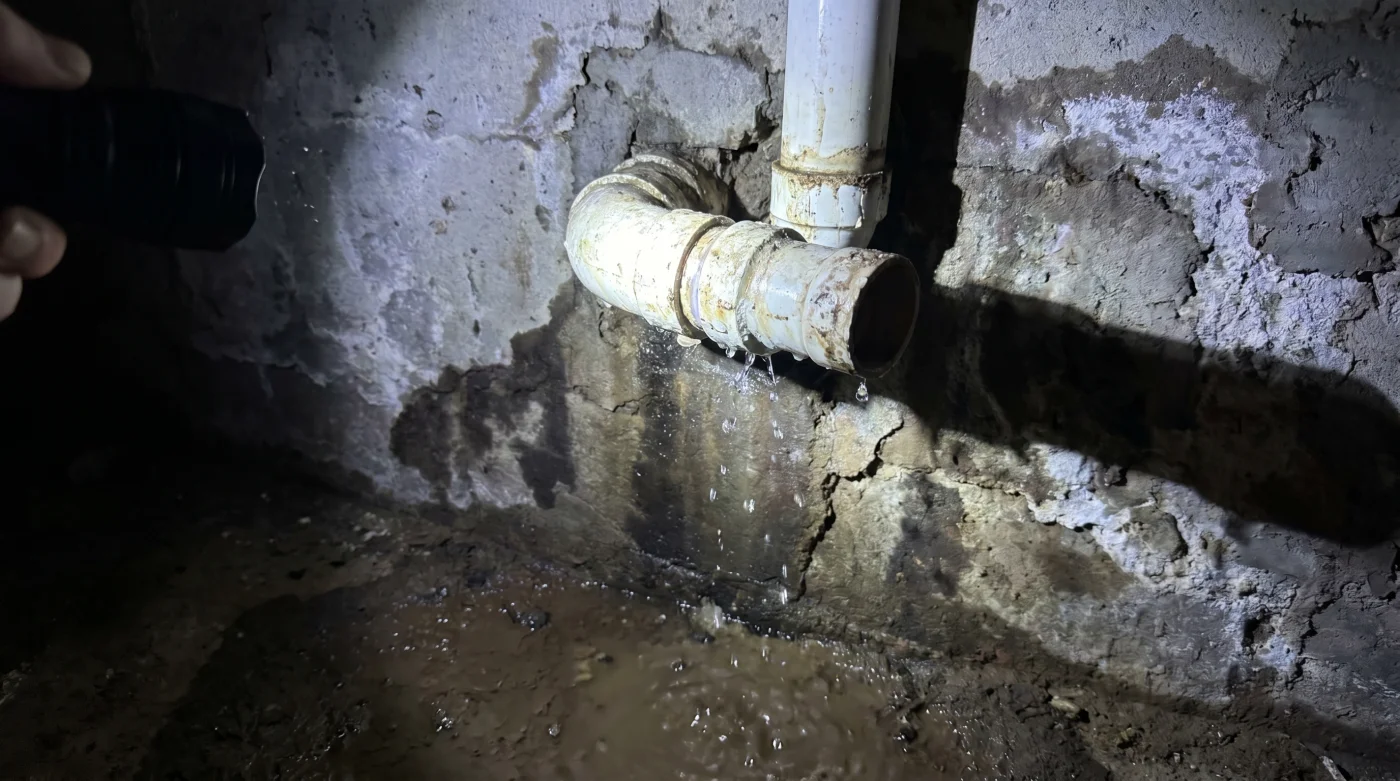
Older homes with fieldstone or crumbling block foundations leak like sieves by nature. These pumps run almost constantly during the thaw. In these basements, the discharge pipe is usually exposed, hanging from rusted iron straps nailed to old-growth floor joists. Over fifty years, gravity pulls those pipes downward, creating a belly in the line. Water sits in that low spot, freezing solid in January, or creating a massive wall of back-pressure in April. Straightening and securing this line is your first line of defense.
The Five-Degree Fix
Correcting this flaw doesn’t require a master plumber or tearing up your concrete slab. It requires a quiet afternoon, a few basic materials, and a fundamental respect for gravity. Re-pitching the exit line five degrees stops basement floods permanently by ensuring every drop of water escapes the system the moment the pump rests.
Here is your tactical toolkit: a standard torpedo level, a ratcheting PVC cutter, fine-grit sandpaper, PVC primer and cement, and heavy-duty J-hook pipe hangers.
- Start at the basin: Unplug the pump and locate the check valve. This is the starting point of your vertical lift.
- Trace the horizontal run: Follow the pipe from the elbow above the pump to the wall exit. Place your torpedo level on the pipe. If the bubble is dead center or leaning back toward the pump, you have found the fatal flaw.
- Release the tension: Unscrew the existing pipe hangers holding the horizontal line. You will likely feel the heavy, sloshing weight of trapped water inside. Have a bucket ready.
- Cut and re-glue: If the pipe is too long to angle upward without hitting the floor joists, cut a small section out near the elbow. Re-glue the connection, forcing the pipe to slope downward toward the outside of the house.
- Secure the pitch: Install new J-hooks every four feet. Drop each consecutive hook by roughly half an inch. This creates a continuous, five-degree downward slope toward the exterior wall.
When you plug the unit back in and fill the pit with a hose, watch the cycle. The pump will hum to life, push the water out, and shut off. But this time, listen closely. You won’t hear the heavy, gurgling rush of water falling back against the valve. You will just hear silence. The water is gone.
Beyond Dry Concrete
Fixing the pitch of a simple plastic pipe feels like a laughably small task compared to the anxiety of a flooded basement. But that is the beauty of treating the root cause rather than treating the symptom. When you stop asking a machine to defy physics, the machine lasts for decades.
You are no longer reacting to a crisis in the middle of a thunderstorm. You have aligned your home with the natural forces acting upon it. When the sky darkens and the rain starts lashing against the windows, you can stay in bed, pull the blankets up, and simply listen to the storm. The low, confident hum of the pump below is no longer a warning bell. It is just the quiet sound of a system working exactly as it should.
‘The easiest way to break a strong machine is to make it carry dead weight. Let gravity do half the work, and the pump will outlive you.’ — Elias Vance, Water Mitigation Specialist
| Key Point | Detail | Added Value for the Reader |
|---|---|---|
| The Hidden Failure | Pumps burn out due to flat or negatively sloped discharge pipes. | Saves hundreds of dollars on replacing prematurely dead motors. |
| The 5-Degree Rule | Pitching the horizontal exit pipe slightly downward toward the yard. | Eliminates standing back-pressure and totally prevents pump stalling. |
| Support Spacing | Securing the PVC with rigid hangers every four feet. | Prevents water from pooling in sagging pipes and freezing in winter. |
Common Troubleshooting
Why does my sump pump run every three minutes during heavy rain?
It is likely re-pumping the same water. A failing check valve or a flat discharge pipe lets water flow back into the pit the moment the motor stops.Do I really need a check valve if my pipe is angled correctly?
Absolutely. The check valve holds the vertical column of water. The five-degree pitch handles the horizontal run. You need both to beat gravity.How far should the water discharge outside my house?
At least six to ten feet away from the foundation. If it drops right at the exterior wall, it just seeps straight back down to the pump basin.Can I use flexible corrugated pipe for the interior run?
Avoid it. Corrugated ridges trap water, slow down flow, and sag easily. Rigid PVC is the only way to guarantee a permanent, smooth slope.What if my basement ceiling is completely drywalled?
Cut a small access panel near the rim joist where the pipe exits. It is far cheaper to patch a twelve-inch square of drywall than to replace a flooded floor.